
Resin or concrete: which material should you choose?
Resin allows fine detail at a manageable weight; concrete brings mineral presence and wind stability. An honest comparison.
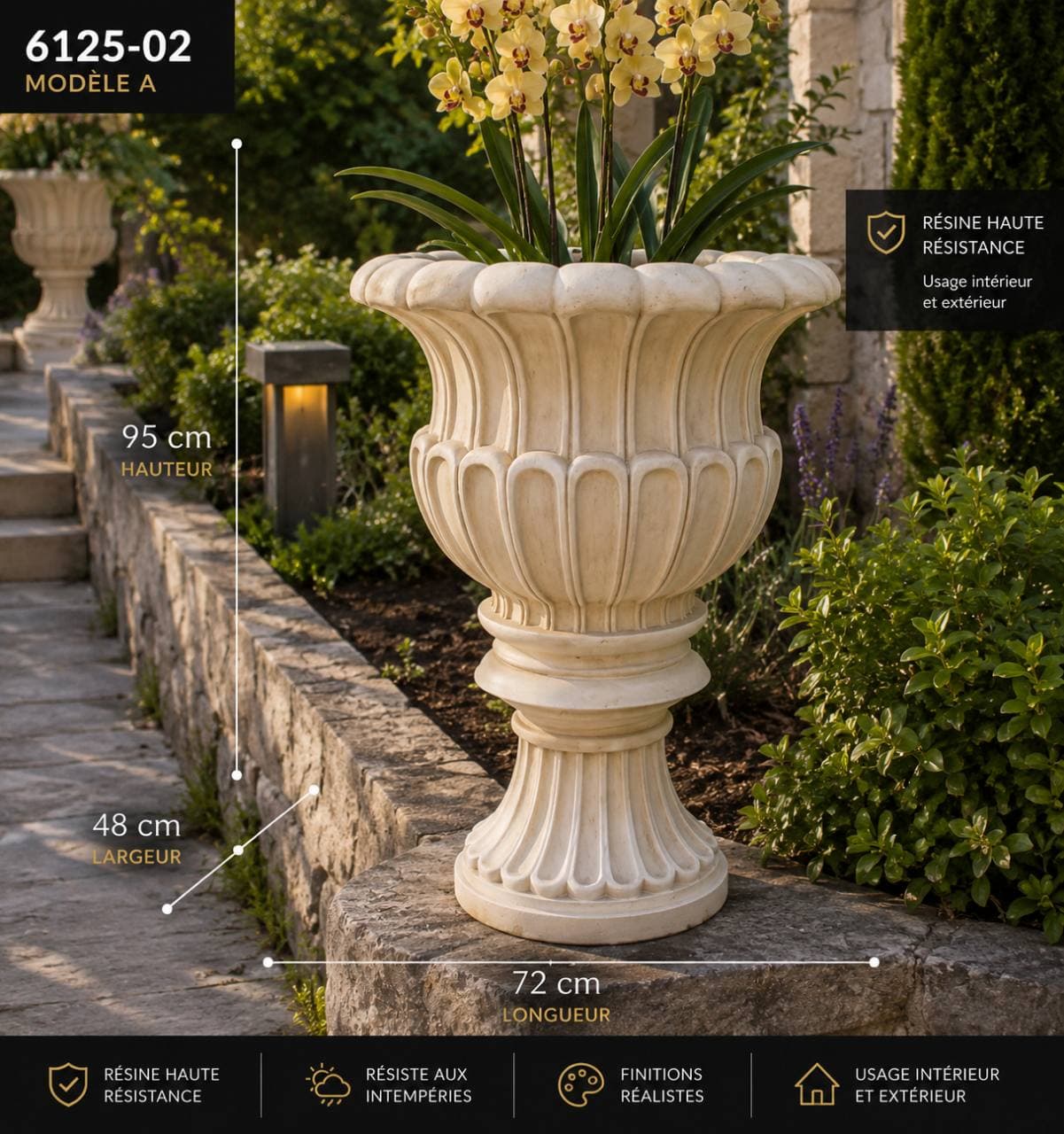
This is the question we hear most, and the answer depends less on taste than on three concrete things: the load your surface can take, the wind exposure, and the sculptural detail you want.
Weight first
A 110 cm resin piece weighs between 40 and 60 kg. The same piece in concrete often exceeds 200 kg. On a roof terrace, a balcony, a pedestal-paved deck or a timber floor the question settles itself: resin works, concrete needs a load check.
Sculptural detail
Resin holds detail that concrete cannot: a peacock’s plumage, the fall of a garment, the curls of a mane. Concrete, cast in a mould, rounds off edges. For a heavily ornamented piece, resin is objectively better.
Standing up to wind
This is resin’s weak point. A tall, light piece in full wind must be weighted or fixed down; concrete does not have this problem. On open ground or by a lake, plan a fixing whatever the material.
How they age
- Resin: does not freeze or crack, and holds its colour for years. It can dull slightly after very long sun exposure.
- Concrete: patinates, greens over, takes on the character of the place. An advantage if you want an aged look, a drawback if you want the piece to stay crisp.
And the price?
At equal size, resin generally costs less, especially once delivery is counted: two people suffice where concrete needs lifting gear. An invisible cost on the product page, but a very real one on installation day.
Our position is simple: resin suits the great majority of decorative projects. Concrete earns its place for a piece in strong wind, or when mineral patina is part of what you are after.